
Humanoid Robots Shatter Sprint Records
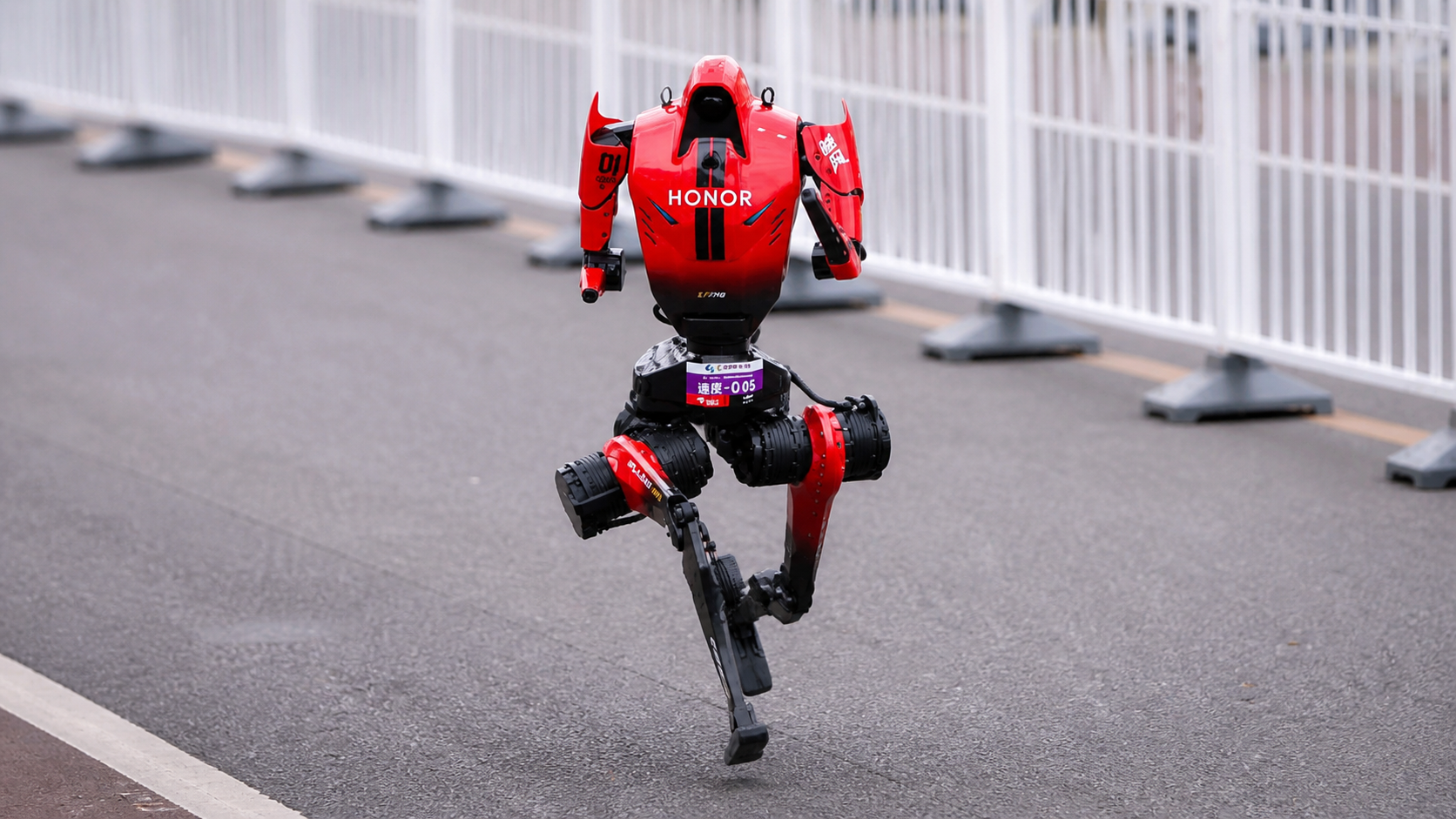
Humanoid robots have run faster than the quickest recorded human athletes, marking a significant advance in robotic locomotion. Two machines completed 100 metres faster than Usain Bolt’s 9.58-second world record at the World Humanoid Robot Games in Beijing.
Another humanoid completed 400 metres in 39.7 seconds, beating Wayde van Niekerk’s human record of 43.03 seconds. The performances represent a major improvement from 2025, when the winning robotic sprinter required more than 20 seconds to complete 100 metres.
The rapid increase in speed reflects progress across several technologies. High-powered actuators must move robotic joints quickly, while control software continuously adjusts balance, stride and body position. Batteries must deliver sufficient energy without excessive weight, and cooling systems must manage heat generated during intense movement.
The records demonstrate that engineered bipedal machines can now exceed human physical limits in controlled running events. They also provide measurable evidence of how quickly China’s humanoid robotics sector is improving its hardware and motion-control systems.
Control after the finish remained difficult. The robots failed to brake reliably and collided with protective mats placed beyond the track. This showed that acceleration and maximum speed have developed faster than stopping precision and safe movement.
The five-day competition includes 51 events, with 30 sports contests and 21 workplace scenarios. More than 40 per cent require fully autonomous operation. Practical tests include cable connection, electric-vehicle charging, industrial assembly, material loading and emergency response.
These events examine capabilities that sprint records cannot measure. Workplace robots must identify objects, position their hands accurately, control force and recover from errors without assistance.
Breaking human running records is an important engineering milestone, not merely a demonstration. It confirms substantial progress in robotic power, balance and control. The next stage is transferring those advances into machines that can move safely, handle objects precisely and perform useful tasks consistently outside competition.