How Tech M&A Leader Ignatious Wins by Adopting its Clients’ Definition of Success
“‘Technology company’ is a broad term,” asserts Storm Duncan, one of the Top 5 all-time ranked technology tech M&A bankers as well as founder and managing partner at Ignatious. “And we define it broadly: any company that uses technology as the primary driver of its solution.”
As a technology investment banking boutique focused on M&A and private capital raising, Ignatious has a remit that strikes a fine balance between the discrete—they deliberately limit their engagements to companies valued under the $1 billion mark (before Ignatious gets involved)—and the diverse: “Technology doesn’t have to be just a software, deep tech, or a semiconductor company,” Duncan says, “it can be property technology companies redefining home ownership and financing, or healthcare companies delivering AI-enabled solutions.”
Within that framing, however, most of Ignatious’ transactions are AI-driven, Duncan explains. The company works in a range of sectors, including mobility, robotics, software, healthcare IT, ad tech, consumer tech, and fintech. Most importantly, though, Ignatious won’t take on an engagement unless they believe they can unequivocally deliver a better outcome than any other advisor. “Other firms take a handholding approach, just walking companies through the process and adding no value,” Duncan explains. “We commit, go deep, and drive the story and process to maximize the outcome. We want everyone to know Ignatious for its ability to capture superlative additional value far in excess of others.”
“That’s our goal,” Duncan says. “We only take on mandates where we are confident we can outperform for our client partners.”
From Goliath To David
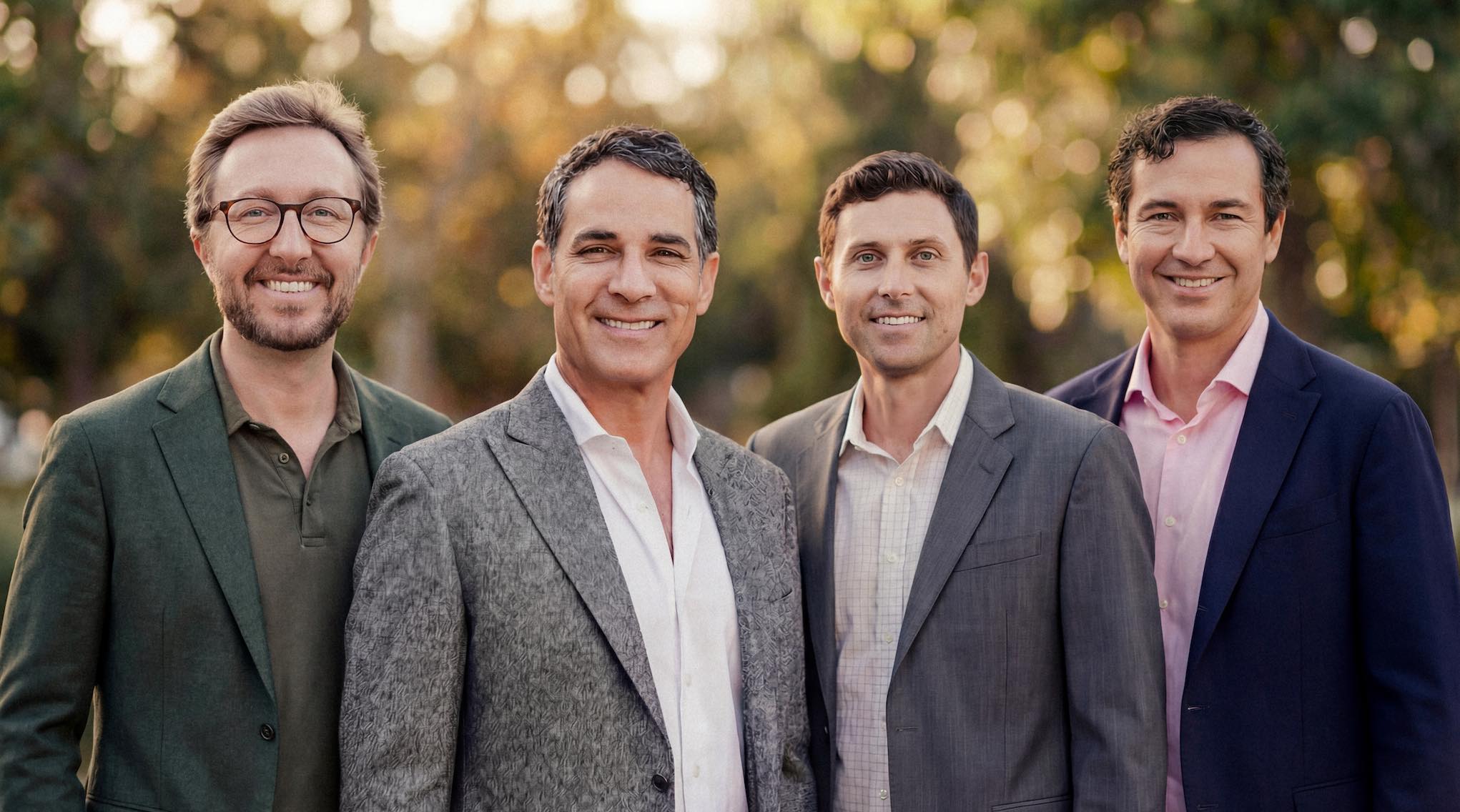
Ironically, Ignatious’ C-suite cut their teeth representing exactly the household name tech giants —companies like Google, Alibaba, Microsoft, Tencent, AMD, Intuit—who now sit opposite of them at the negotiating table. “Working with these major strategics for dozens of years gave us proprietary insights into how they think, acquire, structure, and negotiate,” Duncan says. “Over time, we realized there was effectively no one strong on the ‘other side’—no advisor representing the emerging-growth companies and true entrepreneurs building the next generation of technology.”
Ignatious’ team saw an opportunity to represent these emerging technology leaders and, as Duncan puts it, “to help them to capitalize on what they’ve built—aligning them with the best strategic and financial partners to help distribute their technologies more broadly—with less stress, greater resources, and stronger brands behind them.”
Duncan believes this breadth of experience and narrowness of focus is part of what brings company leaders through their doors. “The very large banks are all fighting over the same giant transactions,” he explains. “Everyone wants to represent OpenAI or Anthropic; the bulge brackets—Goldman, Morgan Stanley, JP Morgan, Citi—are competing intensely for those, and they don’t dedicate senior resources to the emerging technology leaders. There are other banks focused on these emerging leaders, of course, but none of them are led by people who have succeeded at the scale and outcomes we have.”
“Instead of working for the Goliaths, helping them buy other companies big and small, we now bring that same energy and expertise to entrepreneurs,” he says. “We get them the best possible deal from large buyers—working exclusively for them and their interests, not the buyers.”
A Premium On Certainty
One of Ignatious’ more subtle—but no less important—differentiators, Duncan says, is that the company has a deep understanding of the drivers of valuation. “Over our 30 years in the space, we have a proprietary list of the 15 key value drivers for strategic buyers,” he explains. “Almost all company attractiveness and valuation stems from a combination of those 15 drivers. We rank every company against them, and that allows us to negotiate the highest possible price based on matching buyers to our client’s value drivers.”
“If you take the risk to leave a safe job, start a company, and finally achieve the success you envisioned, you deserve the highest price you can get. That is what we do better than anyone,” says Duncan.
Ignatious’ team also prioritizes certainty. “Once you decide to engage with buyers—whether they approach you or you believe that path best expands your market—you can’t go back,” Duncan says. “If a process fails, it’s damaging psychologically for founders, for the relationship with the Company’s investors, and for company morale. So we focus equally on certainty of outcome in addition to maximizing valuation.”
Naturally, they also seek to minimize risk, time, and disruption and to the company and its stakeholders. “Time is risk,” Duncan asserts, “so we minimize disruption to the management team, because if a process drags on and distracts leadership, it hurts operations and erodes the competitive advantage entrepreneurs have worked so hard to build.”
A Matter Of Trust
When asked about Ignatious’ impressive track record, Duncan reflects back on something he noticed very early in his career. “Everyone in investment banking liked talking about their bonuses—how much they made, how it compared to their peers, and how they were going to spend them,” he says. “While I was building company merger models, they were building personal financial models.”
“My perspective from the very beginning was fundamentally different: focus entirely on how the client defines success in each transaction,” he says. “And that is always my first question for a new client.” In banking, fees are almost always success based, meaning that the bank gets paid only when a deal gets closed, causing a strong potential conflict between their advice and their compensation.
“I’d be working on multibillion-dollar transactions, and if I believed the company shouldn’t exceed a certain purchase price on an acquisition, or that there were fundamental risks, I would always tell them,” Duncan recalls. “If I was selling a company and believed we could get more by waiting or by taking a more aggressive or conservative approach, I would recommend that—fees never crossed my mind.”
Duncan has staked his reputation on this willingness to speak plainly—to give the best advice possible in that moment, even if it might completely erase any economic benefit to him personally. “What I learned is that when you consistently do that, people trust you,” he says. “You build long-term relationships because they realize you care solely about their success, so they in turn learn to care about your advice. My entire 10-year exclusive relationship with Google was built on that trust dynamic.”
The ability to deliver a clear, well-informed read of the landscape, unvarnished by self-interest, is all too rare in their industry, Duncan observes. “My goal wasn’t to engineer long-term relationships; it was just a natural byproduct of advising people for the actual purpose they hired you,” he says. “That approach has been the biggest differentiator in my success.”
‘He Yoda, You Luke Skywalker’
Ignatious’ team is the first to point out that they’re not for every situation. “We will not take on a transaction unless we believe we can get you substantially more value than you can achieve on your own or from other advisors,” Duncan says. “If someone comes to us and says, ‘We have four bidders that have all submitted offers, and we’d like to hire you,’ I tell them we are absolutely happy to help—but I’ll be upfront about the fact that they already have the perfectly competitive process, and very few advisors have the experience to increase value above what the Company can achieve on its own.”
In his experience, most advisors would take that mandate, charge an exorbitant fee, and then claim credit for value that the entrepreneur created. “We don’t believe in that,” he says. “If we take it on, we charge appropriately for the value we create. Our client is the Luke Skywalker of our world, they have the risk and deserve the rewards. We are merely their Yoda sitting in the background and helping them navigate the process and negotiations.”
There are also sectors for which Ignatious’ team would readily assert that they are not the best fit. “If we don’t have the expertise, the relationships, and the ability to execute flawlessly, we won’t take it on,” Duncan says. “Without that sector-specific understanding—knowing specifically what drives value, how companies best position for the future, and who the buyers and decision makers are—we can’t add more value than someone else. In those cases, we recommend to the Company the best advisor who can actually deliver that same phenomenal outcome.”
Knowing this, companies throughout the tech ecosystem always see Ignatious as a safe first call; they are confident that, no matter what, they’ll either have Ignatious as their advisor, or get placed in another great pair of hands.
But for Ignatious’ team, being straight-shooters isn’t just a means to a competitive end; it’s the ethos that underpins the entire operation. “Doing the right thing within our tech community—among founders, VCs and investors—is always the only answer,” Duncan says. “And I think that’s what people respect most: We look out for their interests, not ours.”