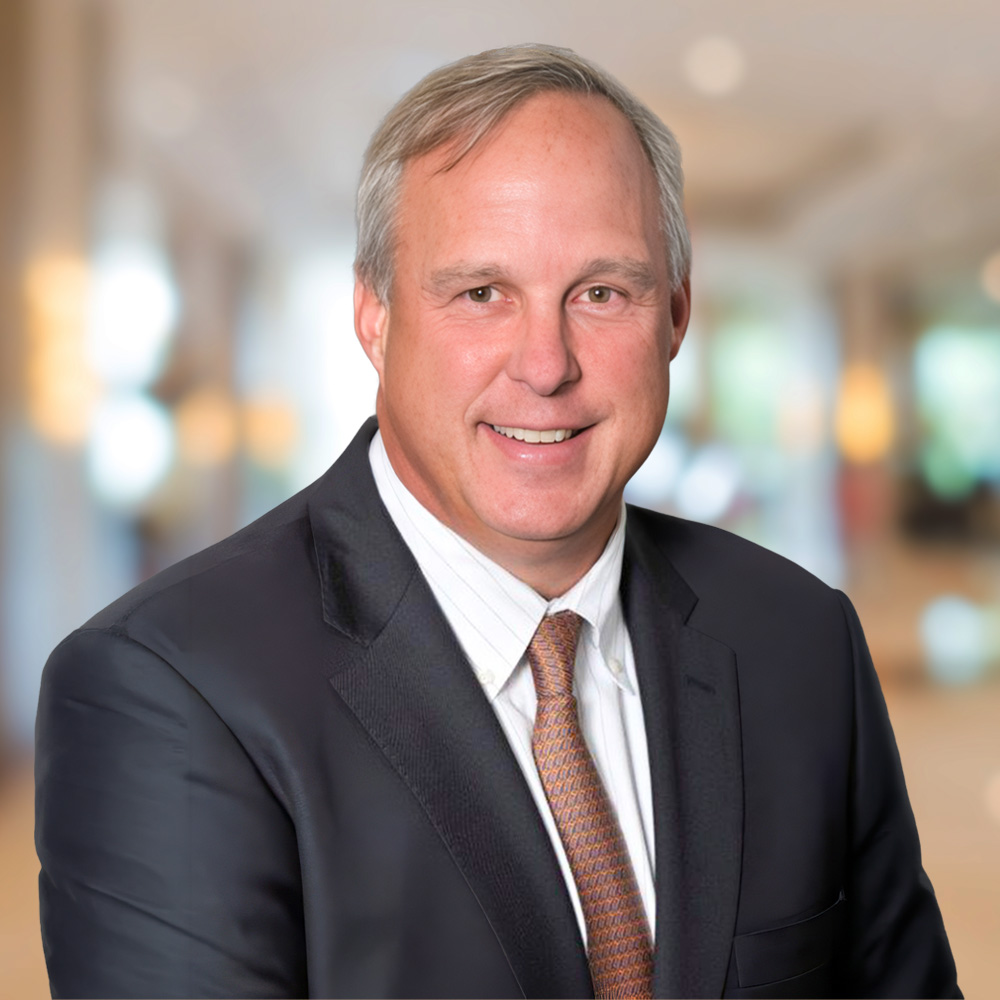
Q&A with Rick Kahlbaugh, Chairman and CEO, The Fortegra Group
We speak with Rick Kahlbaugh about Fortegra's acquisition by DB Insurance, the opportunities ahead in the excess and surplus lines market, and the trends shaping global specialty insurance.
Pan Finance (PF): Fortegra's acquisition by DB Insurance closed on May 29, 2026, marking the first acquisition of a US insurer by a Korean non-life carrier. Why is this transaction a win for both companies?
Rick Kahlbaugh (RK): Because each side supplies exactly what the other needs to reach a shared goal. DB Insurance has been one of Korea's leading property and casualty insurers for more than six decades, with A.M. Best A+ (Superior) and S&P A+ ratings, over $45 billion in assets, and gross written premiums exceeding $16 billion. Their stated ambition is to become a leading global insurance group by 2033, and that requires a broader presence in the US specialty market and entry into European specialty markets. Fortegra delivers that platform on day one: an established market presence, a proven track record of underwriting consistency, and long-standing distribution relationships built over more than 45 years.
For Fortegra, the transaction answers the question every growing specialty insurer eventually faces: where does the capital come from? We now have durable, permanent capital backing our growth initiatives and market expansion, including into Asia, from an owner whose financial strength speaks for itself. As I said when we closed, every company eventually changes ownership. That is the nature of business. The closing of this acquisition is a starting point. As part of DB Insurance, Fortegra is positioned to expand geographically, enhance our capabilities, and deepen our market presence in the US, Europe, the United Kingdom, and Asia. Together, we intend to build a recognized leader in the global specialty insurance market.
PF: It certainly sounds like the start of a significant new chapter for Fortegra. With that in mind, what changes for Fortegra's partners and customers?
RK: Very little, and that was by design. Fortegra operates independently, with our existing leadership team, our distribution relationships, and our underwriting discipline all intact. Agents, distribution partners, and customers will continue to experience the same service that has always defined working with Fortegra. What changes is what stands behind us. Our value creation strategy remains built on the same five disciplines: developing relationships with reliable, quality distributors and agents; unwavering commitment to consistent underwriting excellence; disciplined claims management; effective balance sheet management and risk mitigation; and leveraging artificial intelligence and data science to enhance decision-making. DB didn't acquire Fortegra to change that formula. They acquired us because of it.
PF: That underwriting discipline is particularly important as the excess and surplus lines market continues to grow. Where does Fortegra see opportunity?
RK: The opportunity begins with a structural reality: risk is now evolving faster than the admitted market can respond. Regulatory frameworks built around state-by-state filings serve an important purpose, but they were never designed for exposures that transform in months rather than years. The E&S market's flexibility of rate and form is the mechanism the industry has for insuring the economy's newest risks in real time.
Consider the infrastructure being built around artificial intelligence and data. These facilities present a combination of exposures, from power and environmental dependencies to business interruption and catastrophe accumulation, that has never lived comfortably within a single policy. Underwriting them well demands expertise drawn from property, casualty, and energy disciplines simultaneously. That kind of manuscriptal, cross-disciplinary work is precisely where a nimble specialty underwriter earns its keep.
We're also energized by what I'd call purpose-driven product innovation. We've developed warranty structures for high-cost pharmaceutical and biological treatments, where the economics had made coverage difficult and patients were caught in the middle. Aligning the interests of manufacturers, insurers, and patients through a creative risk transfer structure is the insurance industry at its best. Insurance has always facilitated the economy; increasingly, it can facilitate people's well-being too.
PF: You’ve touched on some significant shifts in both risk and product innovation. Looking at the industry more broadly, what trends do you think our readers should be watching?
RK: Three come to mind. First, the delegated underwriting authority channel continues to strengthen. New MGAs and MGUs keep forming, and the underwriting talent inside them has never been better. The stereotype of carriers handing over the pen and hoping for the best bears no resemblance to how disciplined carriers operate today; we monitor every program in real time, policy by policy, alongside the rating dynamics. The E&S market is now a source of primary capacity with structural flexibility, and it should be understood that way.
Second, submission flow keeps expanding, which rewards selectivity. In a softening rate environment, the carriers that prosper will be those with the discipline to allocate capacity only to the most reliable partners and the most attractive risks. Growth in our business should always be a consequence of underwriting quality, and never a substitute for it.
Third, technology is finally reaching the segments where it matters most. Technology and AI-enabled underwriting is beginning to solve the expense problem in small-premium and SME business, where economics have historically kept good risks underserved. We use artificial intelligence and data science throughout our own decision-making, and we see the technology as an amplifier of underwriting judgment rather than a replacement for it.
PF: It’s clear that Fortegra is positioning itself against some significant shifts in the industry. With that backdrop in mind, what lies ahead for Fortegra?
RK: Disciplined growth on a bigger stage. For more than 45 years, Fortegra has built its reputation by concentrating on underwriting niche risks across a diverse portfolio of admitted and surplus lines insurance products and warranty solutions. That mission doesn't change. What changes is our reach. With DB's backing, we can pursue geographic expansion across the US, Europe, the UK, and Asia with a confidence that comes from permanent capital rather than episodic fundraising.
Over time, scale will likely broaden our appetite into classes we've historically stayed away from, because at a certain size your distribution partners rightly expect a wider answer. But we'll expand the way we've always underwritten: worst case first, working backwards, protecting the balance sheet at every step.
Culturally, the integration has confirmed what drew us together. DB shares our commitment to specialty insurance excellence and profitable growth, and our analytical frameworks are strikingly similar. Both organizations believe in accountability, in underwriting as a craft, and in giving reliable partners what they value most: a fast, honest answer. This new chapter is a significant one for Fortegra, and we look forward to working alongside DB to build a leading global insurance group.
Rick Kahlbaugh is Chairman and Chief Executive Officer of The Fortegra Group, Inc., a global specialty insurance company headquartered in Jacksonville, Florida.