
Latin America’s New Capital Frontier: Why Future Wealth Depends on Financial Architecture
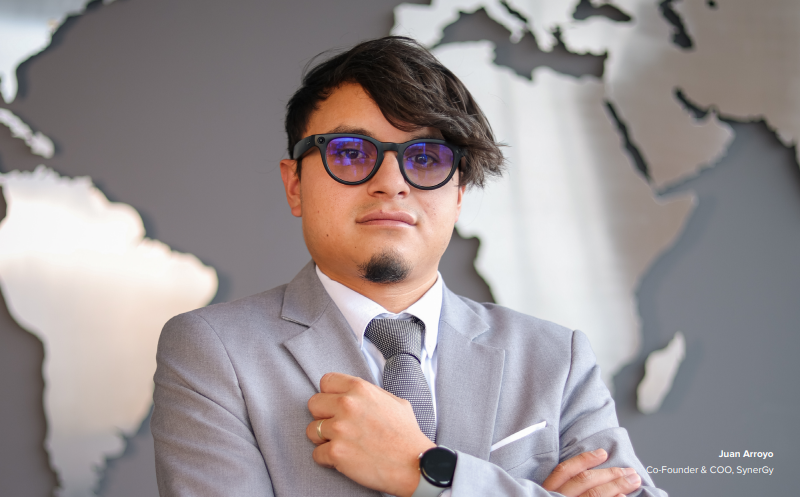
“For decades, the conversation about wealth in Latin America has focused on the ability to generate capital. A new reality is now reshaping that equation and the region’s most sophisticated investors are paying close attention”. Juan Arroyo, Chief Operations Officer, SynerGy
Latin America has long been a region of builders. Family businesses, high-growth enterprises and entrepreneurial groups have driven entire economies, generating billions of dollars in value across generations. Yet a striking paradox persists in how much of that wealth remains concentrated in structures that are deeply dependent on a single person, a single industry, or a single geographic sector.
This concentration creates what some specialists describe as proximity risk the tendency of investors and business owners to keep most of their assets in markets, industries and structures they know well, even when the global economy offers significantly broader diversification opportunities. A rational behavioral instinct characterized by risk aversion, the opportunity cost of which continues to rise significantly.
THE PARADOX AT THE HEART OF THE REGION
While developed economies have moved toward sophisticated models of wealth management family offices, multi-generational succession planning, global diversification much of Latin American capital continues to operate under traditional schemes. The result is a visible paradox: highly successful wealth creators facing greater patrimonial vulnerability when confronted with regulatory change, economic cycles, political risk or technological disruption.
The strategic question is no longer how much wealth can be generated. It is how resilient that wealth can be over the next twenty years.
At SynerGy, we see this shift playing out in real time. Our conversations with high-net worth clients and institutional investors across Ecuador, Peru and Colombia consistently reflect the same underlying tension: significant capital has been created, but the architecture to protect, institutionalized and scale that capital is frequently absent. That gap is the ultimate challenge and the defining opportunity of this decade.
ARCHITECTURE AS STRATEGY
At the global level, institutional investors have understood for some time that building sustainable wealth requires an integrated architecture one that combines asset diversification, technology-enabled portfolio management, risk governance and international investment structures. This is not an abstract concept. It is the operating model that has allowed sovereign wealth funds, endowments and family offices in North America, Europe and Asia to preserve and compound capital across generations and market cycles.
In Latin America, this architecture remains underdeveloped relative to the scale of capital at stake. There is an undeniable truth; the region generates wealth at a rate that outpaces its ability to protect it. Financial holding structures, cross-border investment vehicles, and technology-integrated wealth platforms are no longer the exclusive domain of institutional players in developed markets. They are available; they are necessary, and forward-looking LATAM investors are beginning to demand them.
The architecture of financial holding companies designed to aggregate, diversify and govern capital across geographies and asset classes addresses precisely this structural gap. It is not simply an investment strategy. It is a system for ensuring that the wealth created in one generation does not become a liability for the next generation.
TECHNOLOGY AS THE NEW ENABLER
The digital transformation of financial services is accelerating this shift in ways that were not possible a decade ago. Artificial intelligence, predictive analytics, automated portfolio monitoring, and real-time risk modelling are strategically changing the way individuals, companies, and lifelong investors make decisions.
For the first time, tools that were once reserved for large institutional actors are becoming accessible to business families, high-net-worth individuals, and growth-stage companies across the region. Technology is integrating dispersed information, modelling risk scenarios, analyzing global exposures, and enabling far more sophisticated patrimonial strategies than traditional advisory models allowed.
In a positive note, access to real-time data is reducing historical information asymmetries that have long disadvantaged Latin American investors relative to their counterparts in developed markets. The playing field is levelling but only for those with the institutional infrastructure to take advantage of it.
THREE FORCES SHAPING THE NEXT DECADE
Looking at the trajectory of wealth management across the region, three structural trends will define the landscape over the coming decade.
The first is the professionalization of wealth. Business families that have historically managed their assets informally are increasingly seeking institutional structures of governance frameworks, professional boards, and multi-asset strategies to administer their capital. This is not a cultural shift. It is a rational response to the growing complexity of the global investment environment.
The second is internationalization of capital. Geographic diversification is transitioning from an option to a strategic imperative. Currency concentration, political volatility, and regulatory risk in domestic markets are making the case for international portfolio construction more compelling than at any point in recent history. Investors who remain exclusively local are, in effect, making an active bet on a single set of political and economic outcomes.
The third is the integration of finance and technology. Investment decision-making will increasingly depend on intelligent platforms capable of transforming complex, multi market data into actionable strategies. The firms and investors that embed these capabilities into their operations will hold a structural advantage over those that continue to rely on traditional advisory models.
REDEFINING WEALTH FOR THE TWENTY-FIRST CENTURY
The wealth of the twenty-first century will not be measured solely by the size of a balance sheet. It will be measured by the capacity of that capital to adapt, endure, and compound in a global environment defined by volatility, accelerated innovation, and the constant transformation of markets.
For Latin American investors, the transition from wealth generation to wealth architecture is not a distant horizon. It is an immediate operational priority. The families, companies and institutions that understand this shift and build the financial infrastructure to act on it will be significantly better positioned to navigate the challenges and opportunities of the decades ahead.
The true competitive advantage of the future will not be the ability to generate more capital. It will be the ability to build the institutional architecture that allows that capital to survive, grow, and remain across generations.
That is the proposition at the core of SynerGy’s model, and it is the conversation that Latin American wealth management can no longer afford to postpone.
SynerGy is a Miami-headquartered financial holding company operating across Latin America, with active operations in Ecuador, Peru and Colombia.