
AEI Capital Group and The Capital That Stays
There is a widely repeated claim that capital has grown scarce. It has not. Capital is abundant — arguably more so than at any point in a generation — but it has been concentrated more in the western world vis-à-vis Asia which is the largest growth engine in the world.
In the United States and Europe capital chases a narrow band of assets to valuations that strain belief. Across Southeast Asia and Greater China, where growth is real and innovation is not in short supply, comparable companies trade at a persistent discount. The scarcity is not of capital; it is of capital willing to cross the distance to where the growth actually is. The discount sits in the assets, not in the money.
AEI Capital Group has built its business on closing that distance. Dual-headquartered in Hong Kong and Kuala Lumpur and founded in 2011, the group runs private equity, public equity, secondaries, private credit and hedge fund strategies alongside mergers and acquisitions, specialised fund structuring, corporate advisory and technology venture incubation arm, with groupwide assets under management exceeding USD 7 billion. It is today one of the largest growth equity-focused alternative asset management groups in Southeast Asia and Greater China. But the identity matters more than the number: AEI has set out to define a category rather than compete inside one. Its discipline is growth equity — not venture capital, not private equity, but the intersection of the two, run across both private and public markets.
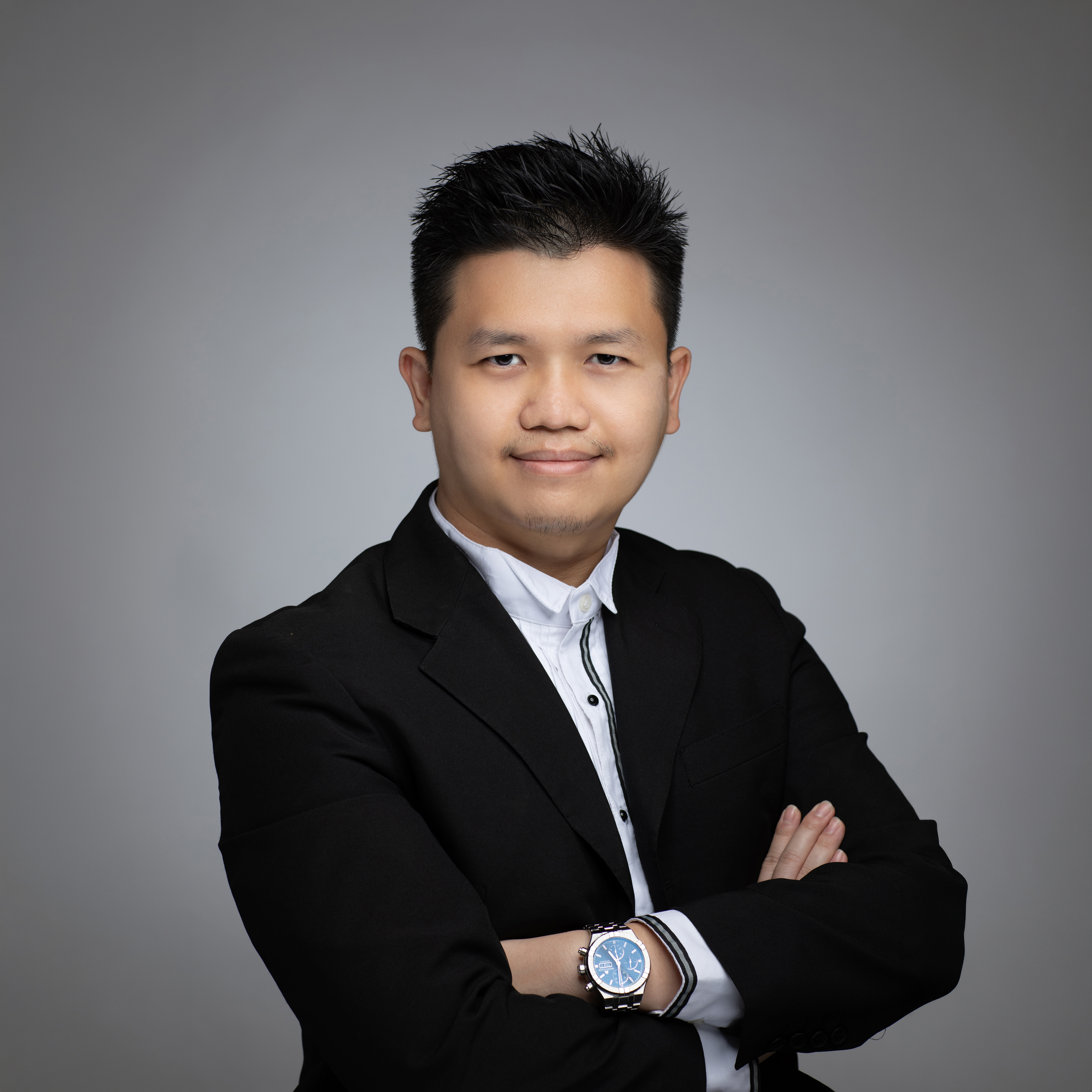
“We are not a VC and we are not a PE house,” says John Tan, the group’s Chief Executive Officer. “Growth equity is its own discipline. It means following one company through the whole of its capital structure — private to public, equity to credit and infrastructure — and being the capital that stays when the others have gone. That is the category we intend to own.”
One thesis across the capital structure
The premise is that a growth-equity position in Asia cannot be served by a single instrument. A company caught at the point where a structural shift in its industry could carry it to materially greater scale needs different things at different moments: primary equity to fund expansion, credit where the owner is less receptive to dilution, a route to a listing or a trade sale, and frequently continued capital after that event rather than a clean break.
Each of AEI’s lines maps onto a stage of that arc. Public equity lets the group keep supporting a company once it is listed. Private credit funds situations where control matters more to the owner than cost of capital. Secondaries create liquidity without forcing a sale. Corporate advisory and M&A run alongside the group’s own principal investment thesis rather than as a standalone agency advisory business, so the people structuring a transaction are the people carrying the position — removing a familiar misalignment between adviser and investor. Venture incubation sits within a digital and technology arm that also supplies portfolio companies with technology-enabled operating support.
The mispriced middle
Public capital markets have compounded the imbalance. The largest exchanges — Hong Kong and the United States among them — reserve their attention for the very top of the size distribution: the decacorns valued above USD 10 billion, and to a lesser degree the cohort above USD 5 billion. Below that line, coverage and liquidity thin quickly. The effect is a long tail of sound, mid-sized companies — the small-cap that ought to be mid-cap, the mid-cap that ought to be large — that public markets effectively overlook.
That long tail is where a growth-equity discipline earns its alpha, or even super-alpha. Asia accounts for the majority of the world’s population and a rising share of its growth, yet its assets are priced as though the reverse were true. AEI’s role is to move companies up the size and liquidity curve of their fair value — small to mid, mid to large — supplying the capital and the structuring that let intact fundamentals express themselves in price. “The innovation and the growth are here,” John Tan says. “What is missing is the pricing and the liquidity. We exist to close that gap, one company at a time.”
The two-way bridge
This is where the group’s Western offices earn their place. London and Washington DC are not flags on a map; they are the two ends of a bridge. AEI’s public-equity strength sits outside the region, in precisely the markets where capital is deepest and broadest, and that lets the group run traffic and momentum in both directions. Asian companies with real fundamentals but depressed valuation and liquidity can be capitalised and, where it serves them, carried outward toward the deeper pools that restore their pricing. In the other direction, US and European investors and companies seeking Asian exposure find in AEI a strategic partner whose home advantage is the very market they are trying to enter, and the group joins their cap tables on that basis. Asia-out and world-in, in the group’s view, are the same competence seen from two sides on AEI.
The unglamorous part
Ask John Tan what actually generates return and he does not begin with valuation. “A large share of good Asian mid-market companies are not investable on day one,” he says. “The corporate structure, the related-party history, the accounting, the licensing — all of it has to be rebuilt before an exchange or an acquirer will accept the business. We do that work in-house: legal engineering to make the model defensible, financial engineering to make the accounts auditable. The two teams have to come to consensus and be deeply aligned before anything moves.”
It is work measured in years rather than quarters, and the group positions it — rather than the entry multiple — as the point where value is created. The stance is deliberately effort-intensive, and it shapes how the group is built: legal, corporate development and portfolio management sit as standing divisions alongside origination rather than behind it.
Two headquarters, eight cities
The group operates from eight cities, each justified in origination, execution or licensing terms rather than presence. Hong Kong and Kuala Lumpur serve as dual headquarters; Singapore is a regional satellite and support hub. Hong Kong is the principal regulated centre: the group’s asset management arm there is licensed by the Securities and Futures Commission for Type 4 and Type 9 regulated activities — advising on securities and asset management — serving professional investors as defined under the Securities and Futures Ordinance, while its trust arm carries out trustee functions for family-office mandates.
Kuala Lumpur is the operational headquarters, housing the investment, asset and wealth, trust, corporate development and portfolio management support divisions. Shenzhen and Chengdu handle Greater China origination, where structural-growth companies are found through industry and research networks on the ground rather than from a desk elsewhere. Labuan provides Malaysian offshore financial service infrastructure with Cayman Islands functions as the offshore hub for global asset allocation. London runs through the group’s UK subsidiary, authorised by the Financial Conduct Authority; Washington DC reflects a practical reality — many Asian growth companies now list in the United States, which requires proximity to counsel, underwriters, auditors and investor relations development.
The liquidity question
The group underwrites three exit routes from entry — a trade sale, a listing on a major exchange, or the secondaries market — and treats dependence on any one of them as a design by default. Secondaries have become the most consequential of the three for Asian mid-market portfolios: a single-asset block trade, priced at a disciplined discount to a defensible forward valuation, moves liquidity to the holders who need it, keeps the position in known hands and spares a company from marketing itself in an unfavourable window. AEI participates as both buyer and seller — a pricing discipline that one-directional participants avoid.
Deeper rather than wider
The priority for the next three years is growing scale within existing disciplines rather than new ones: building out the secondaries capability, on the view that Asian portfolio liquidity is a structural shortage rather than a cyclical one; growing the private-credit book to develop global growth equity long-focused ecosystem; and acquiring regulated capability where buying is faster than building. On the client side, growth is in family-office and trust mandates, as wealth transfer across Asia and the Gulf produces families that want one counterparty able to hold private assets, listed positions and a trust structure together in a strategically harmonious manner.
“We have the licences and the geography we need,” John Tan says. “The work now is to industrialise what we already do well — and to make it plain that growth equity in this region has a clear leader. The capital that stays is ours to define.”